
Published
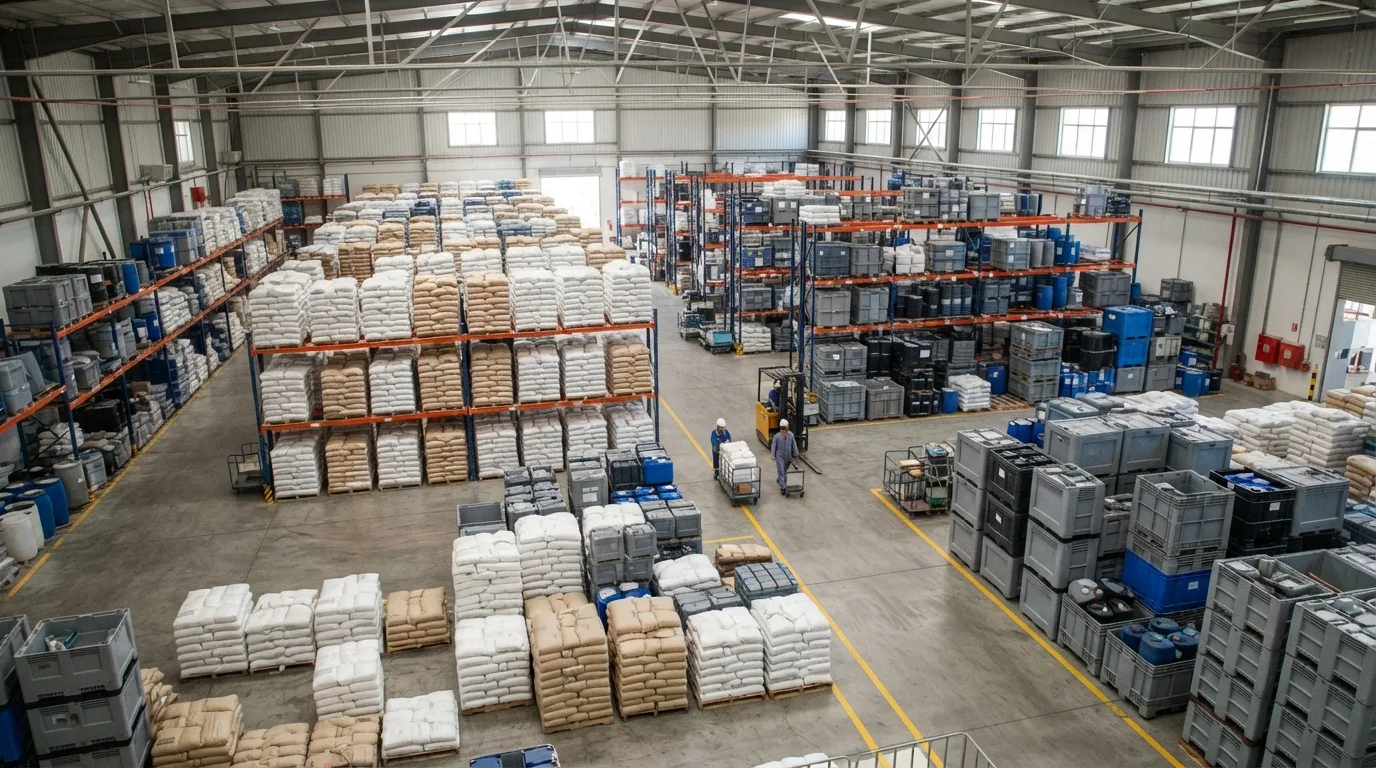 Warehouse inventory serving plastic manufacturers in uae
Direct transport corridors link conversion plants across Abu Dhabi, Dubai, Sharjah, and Ajman, enabling plastic manufacturers in uae to run high-volume packaging, blow moulding, and pipe lines. Processors secure feedstocks via local compounding and recycling facilities or purchase standard containers through established commercial stockists and distribution hubs.
Where Do plastic manufacturers in uae Cluster and Operate?
Plastics processors cluster within designated industrial estates across the Emirates, matching machine footprints to utility access, transport routes, and regional downstream markets.
Abu Dhabi hosts heavy conversion facilities within the Industrial City of Abu Dhabi (ICAD), while Al Ain Industrial City accommodates polymer recycling units alongside agricultural and infrastructure converters. Plants in these hubs run continuous extrusion lines for heavy-wall high-density polyethylene pressure pipe, corrugated conduit, and large municipal water systems.
Dubai accommodates packaging converters, technical moulders, and closure specialists across Dubai Investments Park (DIP) and Al Quoz. These facilities run high-speed hydraulic and electric equipment producing bottles, thin-wall food tubs, and industrial pails.
Sharjah and Ajman support extensive conversion clusters. Facilities in Sajaa Industrial Oasis, Sharjah Industrial Areas, and Ajman Industrial Area operate blown film towers, hollow-ware blow moulding machinery, and general trade injection units. These facilities supply industrial stretch wrap, secondary bundling film, storage crates, and commercial jerrycans throughout the Northern Emirates.
| Industrial Zone | Primary Conversion Sectors | Typical Resin Inputs | Primary Processing Methods |
|---|---|---|---|
| ICAD (Abu Dhabi) & Al Ain Industrial City | Pressure pipes (50 mm to 1200 mm outer diameter), polymer reprocessing, structural profiles | HDPE (density 0.940–0.960 g/cm³), PP block copolymer | Continuous single-screw pipe extrusion, twin-screw compounding, strand pelletising |
| Dubai Investments Park (DIP) & Al Quoz | Rigid packaging, chemical bottles, threaded closures, thin-wall food containers | PP random/impact copolymer, injection-grade HDPE, PET | High-speed toggle injection moulding, reciprocating screw extrusion blow moulding |
| Sajaa & Sharjah Industrial Areas | Agricultural film, pallet shrink film, chemical drums, transport crates | LDPE, LLDPE (density 0.918–0.925 g/cm³), blow-grade HDPE | Blown film tubular extrusion, accumulator head blow moulding |
| Ajman Industrial Area | Domestic consumer hollow-ware, material handling bins, general housewares | PP homopolymer, fractional melt HDPE | General hydraulic injection moulding, shuttle blow moulding |
Where Are Rigid Containers Produced and What Resins Do They Consume?
Rigid packaging converters operate across Sharjah Industrial Areas, Ajman Industrial Area, and Dubai Investments Park, directing their output toward chemical formulators, detergent blenders, lubricant packers, and food processors.
Plants split container manufacturing across two primary forming processes:
* Extrusion blow moulding: Extruders melt resin, drop a vertical hollow tube (parison), close a split mold around it, and expand the melt using calibrated blow pins operating at 6 to 8 bar air pressure. This process outputs narrow-neck bottles, handled jerrycans, and drums ranging from 1 L to 200 L capacity.
* Injection moulding: High-pressure injection units shoot plasticised polymer through hot-runner gates into hardened tool cavities under clamping forces from 1500 to 8000 kN. This route produces wide-mouth pails, heavy-duty shipping crates, material handling bins, and threaded closures.
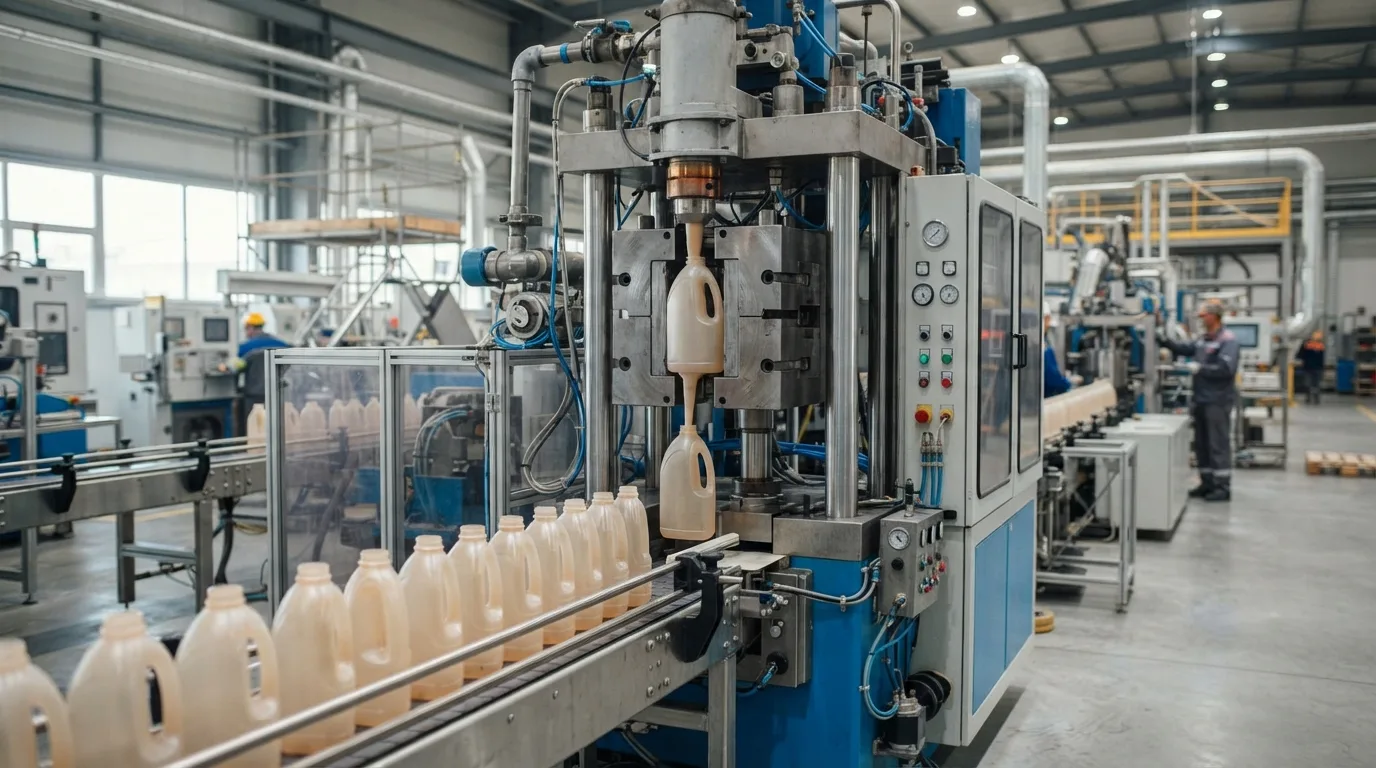 Extrusion blow moulding machine producing industrial containers
Blow moulding lines running chemical jerrycans require high-density polyethylene with a melt flow rate between 0.29 and 0.35 g/10 min (tested at 190 °C under a 2.16 kg load) to secure high parison melt strength and prevent sagging during extrusion. High molecular weight grades maintain container geometry and deliver high environmental stress crack resistance against surfactant chemical formulations. These are typical industry ranges, not the figures of a particular grade; the values for Recycled HDPE Blow Moulding Grade — 1–10L are on its TDS, sent with a quote.
Pail, lid, and closure lines require polypropylene copolymer with an MFR between 8 and 15 g/10 min (measured at 230 °C under 2.16 kg). This flow profile fills thin container walls without inducing high molded-in stress, balancing hinge flexibility with structural stackability under warehouse pallet loads. The values for Recycled PP Packaging / Lid Injection Grade Granules are on its TDS.
How Do Buyers Source Wholesale Containers and Manage Quality?
Procurement teams acquire rigid containers through two channels: direct contract runs with manufacturing plants for custom volumes, or off-the-shelf purchase through commercial distribution hubs in Deira (Al Ras) and Ajman.
Distributors in Al Ras stock standardized bottles, caps, and pails for prompt dispatch, eliminating tooling setup times for operations requiring short runs. High-volume industrial users schedule dedicated production runs directly with converters to obtain customized gram weights, specific color masterbatches, and molded corporate branding.
When ordering directly from conversion plants, technical buyers must agree on clear tooling maintenance and machine setup protocols:
* Specify tool clamping forces to avoid flash generation around parting lines and pinch-off areas. Excessive parting-line flash prevents proper induction sealing on bottle necks and creates sharp edges on handled containers.
* Establish mold cooling circuit parameters. Inconsistent water cooling temperatures across multi-cavity injection molds cause differential shrinkage, leading to ovality in pail rims and leaking snap-fit lids.
* Require standard drop testing from 1.2 to 1.8 meters on water-filled samples conditioned at room temperature. This test validates the mechanical integrity of parison pinch-off weld lines at the base of blow-moulded containers under dynamic shock.
How Does Polymer Recycling and Granule Production Function Locally?
Reclaiming post-industrial and post-consumer scrap into usable pellets takes place in dedicated facilities within Al Ain Industrial City, Sajaa Industrial Oasis, and specialized waste treatment zones across Abu Dhabi and Dubai.
Converters and processors sort materials across the seven primary resin identification categories:
1. Polyethylene Terephthalate (PET): beverage bottles, thermoformed packaging trays.
2. High-Density Polyethylene (HDPE): detergent bottles, pipe scrap, structural drums.
3. Polyvinyl Chloride (PVC): window profiles, electrical conduit, drainage piping.
4. Low-Density Polyethylene (LDPE) and Linear Low-Density Polyethylene (LLDPE): agricultural film, pallet stretch wrap, retail bags.
5. Polypropylene (PP): bottle closures, battery casings, woven sacks, storage tubs.
6. Polystyrene (PS): thermal insulation boards, disposable sheet, protective foam packaging.
7. Other multi-layer polymers and engineering plastics: technical blends, polyamide films, acrylic sheet.
Mechanical recycling facilities process post-industrial scrap (runners, startup purgings, out-of-spec parts) and baled post-consumer containers. The conversion sequence involves rotary shredding, friction washing with hot alkaline solutions to remove adhesive labels, density-based sink-float separation tanks, continuous mechanical drying, and melt filtration extrusion. Melt lines push molten polymer through fine mesh screens (typically 80 to 120 mesh) to extract unmelted contaminants before strand or underwater pelletising.
Golden Square Plast manufactures in Al Ain, Abu Dhabi, producing recycled polypropylene and polyethylene granules formulated for industrial blow moulding, film blowing, and injection moulding operations. Plant managers can inspect the available resin types through the Products catalogue.
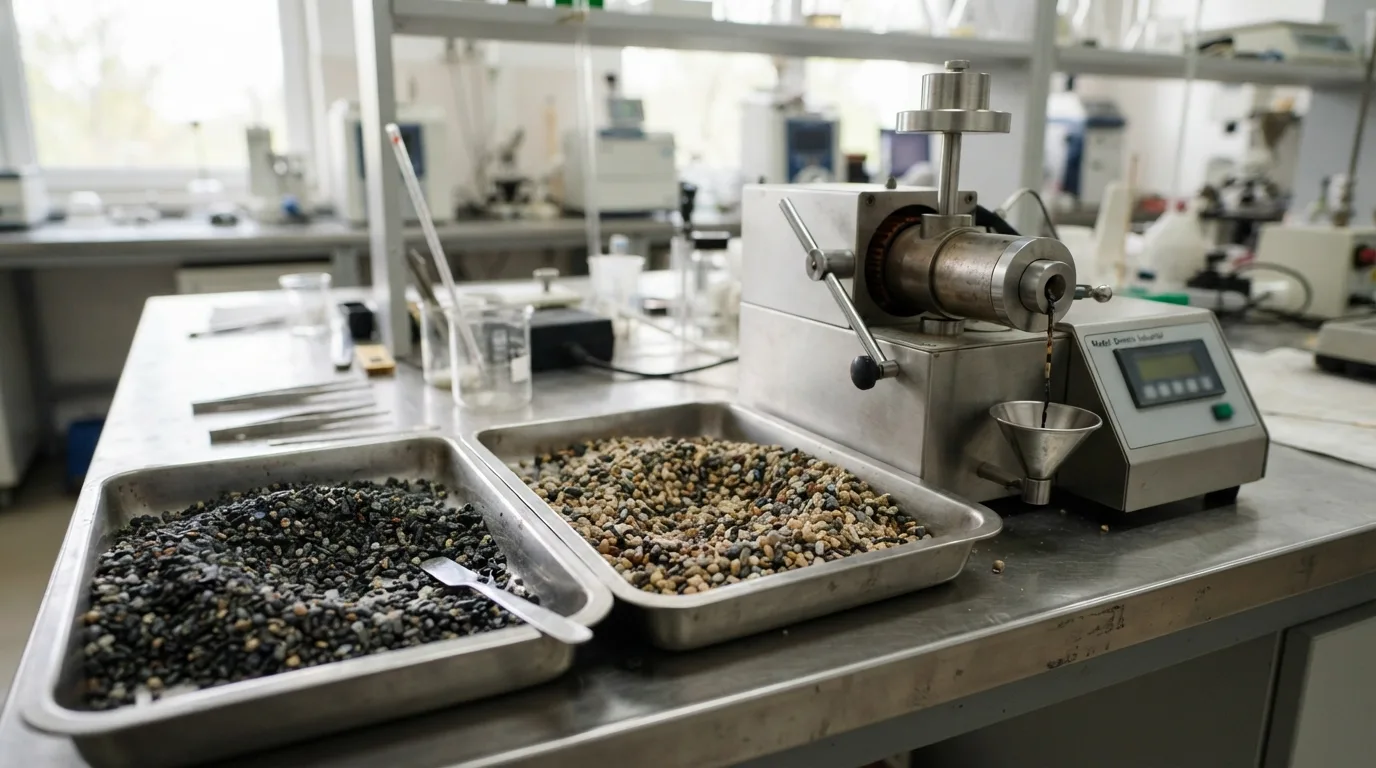 Recycled polymer granules prepared for industrial conversion
How Do Sourcing Engineers Manage Local Polymer Supply Chains?
Procuring polymer locally eliminates marine freight scheduling uncertainties, port congestion surcharges, and container demurrage costs. Road freight networks utilizing Sheikh Mohammed bin Zayed Road (E311), Emirates Road (E611), and Sheikh Zayed Road (E11) allow converters in Dubai, Sharjah, or Ajman to receive regular flatbed truckloads of resin from Al Ain by road, with no port schedule in between.
Quality control teams evaluate incoming resin lots using two bench tests before unloading silos or day bins:
* Melt Flow Rate (MFR) testing in accordance with ASTM D1238. This test confirms that resin viscosity matches mold gating and barrel pressure requirements, preventing short shots or flash.
* Specific gravity and density verification via ASTM D792 displacement methods. This check validates base polymer identity, mineral filler levels, and batch-to-batch uniformity.
Bagged granules require storage inside ventilated, shaded warehouses. Ambient yard temperatures exceeding 45 °C combined with direct solar ultraviolet radiation cause premature thermal degradation, antioxidant consumption, and resin yellowing. Storing palletized 25 kg bags on raised wooden or plastic pallets prevents ground moisture absorption and condensation inside the liner bags.
Sensitive packaging applications require explicit regulatory clearance from national authorities. Because direct food packaging applications demand specific approved grades, processors must review technical qualifications directly with our technical team before production. In conversion plants, operators must maintain active local exhaust ventilation over extruder feed throats, barrel vent ports, and die heads to extract processing fumes, while keeping floor areas vacuumed to prevent airborne polymer dust accumulation near electrical cabinets.
Review your plant's target melt flow index, density, and impact requirements with our engineering team, then Request a quote to arrange trial batches and processing data sheets.