
Published
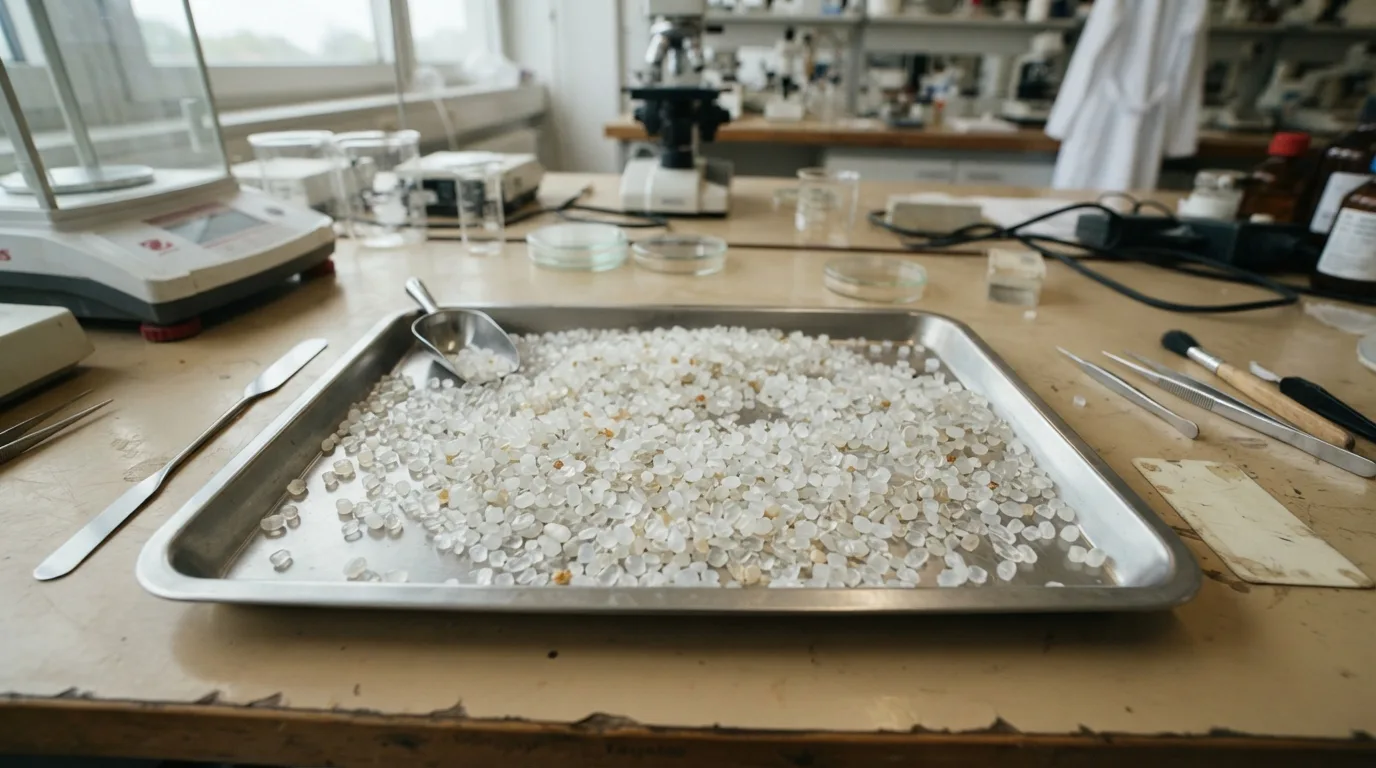 Laboratory inspection of polyethylene resin granules
Choosing the right polyethylene grade depends on structural rigidity and processing windows. High-density grades deliver high tensile stiffness and environmental stress crack resistance for rigid drums and containers. Lower-density variants provide superior elongation, dart impact strength, and rapid heat-sealing for flexible packaging films, requiring careful verification of melt flow and shrinkage before production.
What Is Polyethylene and How Does Density Govern Performance?
This semi-crystalline thermoplastic forms through the polymerization of ethylene monomer gas, with molecular chain architecture dictating final mechanical properties. The engineering distinction between grades stems directly from molecular branching. Highly branched grades contain long, irregular side branches that prevent polymer chains from packing tightly together. Linear grades consist of straight polymer chains that align side by side in dense, orderly crystalline structures.
Chain architecture determines specific density. Low-density and linear low-density variants fall within 0.910 to 0.940 g/cm³, whereas high-density resins span 0.941 to 0.965 g/cm³. This physical density sets the crystalline fraction of the resin. Branched resins exhibit crystalline content between one-half and six-tenths of the total polymer mass. This open morphology allows light transmission, providing optical clarity, high haze resistance, and elastic elongation in blown films. Linear chains elevate crystalline structure to seven-tenths or eight-tenths of total mass, blocking light transmission to yield opaque molded parts with load-bearing stiffness.
Procurement teams querying polymer classifications should distinguish between solid thermoplastic polyolefin resins and low molecular weight polyether liquids or waxes, such as PEG grades used in pharmaceutical carriers and laxatives. Industrial blow molding and film lines process high molecular weight solid resins designed for mechanical toughness rather than chemical dissolution.
How Do Mechanical Stiffness and Stress Resistance Compare?
Plant engineers evaluate resin mechanical integrity through tensile yield stress, flexural modulus, and tear resistance. Lower-density resins exhibit tensile yield strength between 8 and 15 MPa. This profile allows substantial elongation under mechanical load without brittle failure, making the material resilient under tensile strain. High-density grades elevate yield strength to 20 to 32 MPa, giving container sidewalls the necessary resistance against internal pressure and static compressive loads.
Stiffness differences emerge under flexural testing. High-density resins deliver a flexural modulus between 1000 and 1400 MPa, preventing structural buckling in large industrial containers, pallets, and solid panels. Conversely, lower-density resins paired with linear grades deliver superior energy absorption. Blown films achieve dart drop impact values exceeding 300 g, shielding shipping bags and construction membranes from puncture when handling abrasive materials.
Resistance to environmental stress crack resistance remains essential for parts exposed to industrial surfactants, detergents, and active chemical solutions under constant mechanical strain. High molecular weight linear resins with broad molecular weight distributions resist slow crack growth under continuous bend conditions. Plant engineers must verify testing protocols with local regulatory authorities. Resins lacking targeted stress-crack properties develop micro-fissures that trigger leaks and premature field failure in chemical storage.
Joining and converting these non-polar polyolefin resins requires specific preparation. Untreated surfaces exhibit low surface energy, causing industrial glues and inks to de-wet. Achieving reliable adhesive bonding on molded parts or foam packaging requires corona, plasma, or flame surface treatment to raise surface tension prior to applying modified acrylic or cyanoacrylate adhesives.
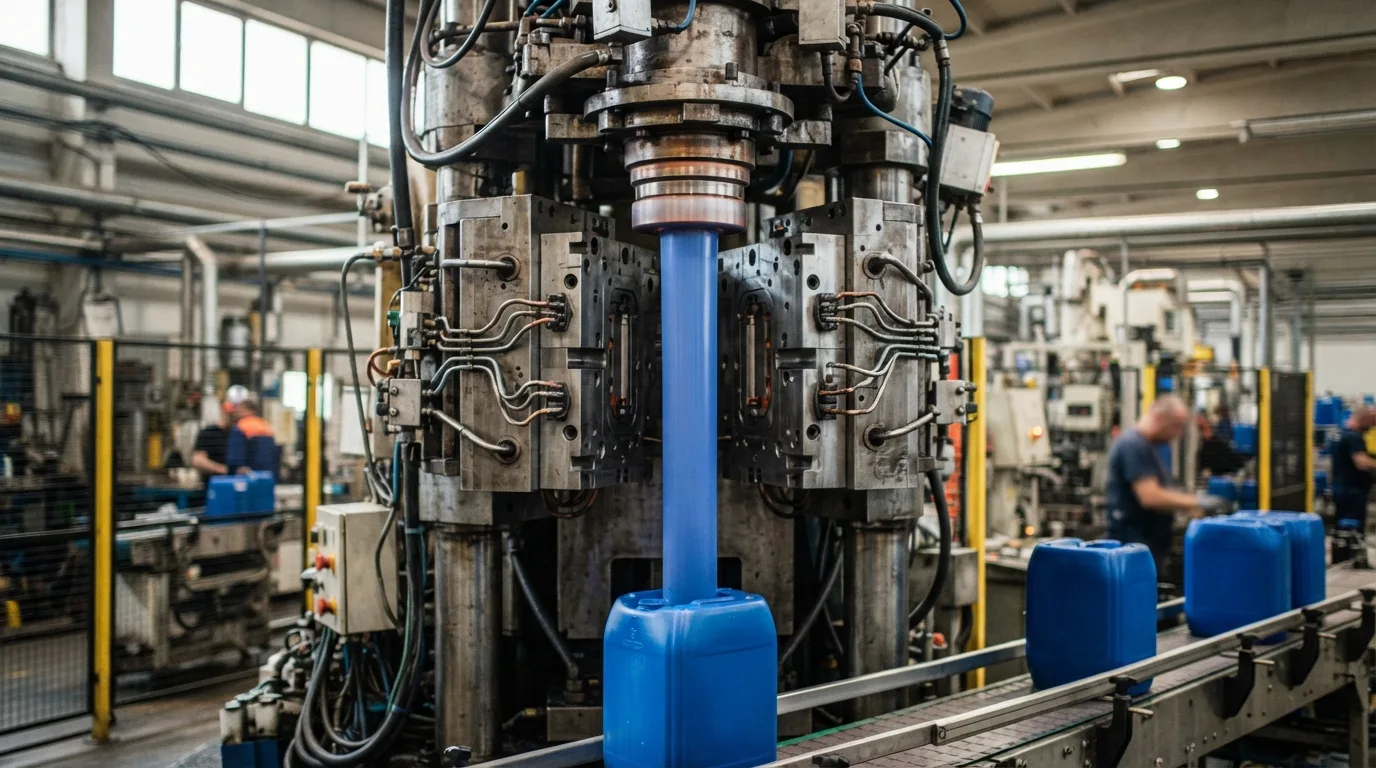 Blow moulding extrusion line for rigid industrial container manufacturing
What Thermal Windows Govern Melting, Sealing, and Mold Shrinkage?
Thermal behavior dictates cycle times, heating profiles, and cooling stage settings across production lines. Low-density resin melts between 105 and 115 °C, offering an energy-efficient thermal window for rapid film extrusion. High-density resin requires greater thermal energy input to melt its dense crystalline lamellae, showing a crystalline melting point between 130 and 135 °C inside the extruder barrel.
These melting points define heat-sealing operating windows on automated packaging machines and bag-making equipment. Flexible film sealing jaws operate between 110 and 130 °C with brief dwell times. In contrast, blow-molded pinch-offs and heavy-gauge sheet joints require higher jaw temperatures and increased clamping pressure to ensure complete molecular interdiffusion without leaving weak seams.
Volumetric shrinkage during cooling requires precise mold cavity sizing. Products molded from low-density grades show linear shrinkage between 15 and 20 mm per 1000 mm due to lower crystalline volume. High-density moldings exhibit elevated shrinkage ranging between 20 and 35 mm per 1000 mm as polymer chains pack into tight crystals. Tool designers must balance mold cooling circuits and extend packing pressure times to prevent part warpage, post-mold dimensional shift, and internal voids in thick sections.
Which Polymer Performs Better: Polypropylene or PE?
The primary operational distinction lies in service temperature and impact behavior. Polypropylene withstands higher continuous operating temperatures, while ethylene polymers retain impact ductility in freezing environments. Heat deflection metrics illustrate this divergence. Polypropylene maintains geometric stability up to 160 or 165 °C, making it suitable for hot-fill containers and steam-sterilized trays. Ethylene polymers soften and lose structural integrity above 120 to 130 °C.
Sub-zero cold reverses this performance advantage. Ethylene polymer maintains ductile impact resistance and crack resistance down to -40 °C, serving as the benchmark choice for cold-storage crates, outdoor drainage pipes, and refrigerated transport. Standard polypropylene turns brittle and fractures readily below 0 °C unless modified with ethylene-propylene impact rubbers.
From a raw material yield standpoint, polypropylene offers lower specific gravity, spanning 0.895 to 0.910 g/cm³. This lower density produces more molded parts per metric ton compared to low-density ethylene resins, which start at 0.910 g/cm³.
| Engineering Property | Low-Density (LDPE / LLDPE) | High-Density (HDPE) | Polypropylene (PP) | Unit of Measure |
|---|---|---|---|---|
| Specific Density | 0.910 – 0.940 | 0.941 – 0.965 | 0.895 – 0.910 | g/cm³ |
| Melting Temperature | 105 – 115 | 130 – 135 | 160 – 165 | °C |
| Tensile Modulus | 150 – 350 | 1000 – 1400 | 1100 – 1600 | MPa |
| Falling Dart Impact at -20 °C (660 mm Drop) | 1.5 – 2.0 | 0.8 – 1.2 | 0.1 – 0.3 | kg |
| Mold Shrinkage | 15 – 20 | 20 – 35 | 10 – 25 | mm per 1000 mm |
| Melt Flow Index (190 °C / 2.16 kg) | 0.5 – 20 | 0.05 – 10 | 1.5 – 35 | g/10 min |
| Primary End Uses | Blown film, liners, squeeze bottles | Drums, pipes, crates, caps | Living hinges, hot-fill containers | Application Category |
Is the Polymer Chemically Inert and Safe to Process Industrially?
Chemical stability and workplace processing safety depend on grade selection and thermal control. The resin exhibits high chemical inertness, resisting non-oxidizing acids, strong alkaline solutions, and aqueous salts without moisture absorption during storage.
Safe factory processing requires managing barrel heating zones. Thermal degradation starts when melt temperatures exceed processing limits, releasing oxidized organic vapors and irritating aldehyde fumes into the plant air. Processing lines require local exhaust hoods positioned directly over die exits and mold clamping zones. Resin conveyance lines, pneumatic loaders, and silos require proper electrical grounding to discharge static electricity and prevent dust deflagration in dry climates.
When processing recycled resin streams, fine melt filtration is essential. Installing continuous screen changers with 100-mesh wire screens captures cross-contaminants, un-melted gels, and degraded particles. This stabilizes melt pressure at the die head and ensures consistent wall thickness. Direct food packaging and potable water conveyance demand approved virgin grades backed by regulatory compliance records from the primary resin producer. Factory technical teams can consult Golden Square Plast to select compliant recycled grades for industrial containers, construction liners, and non-food packaging lines.
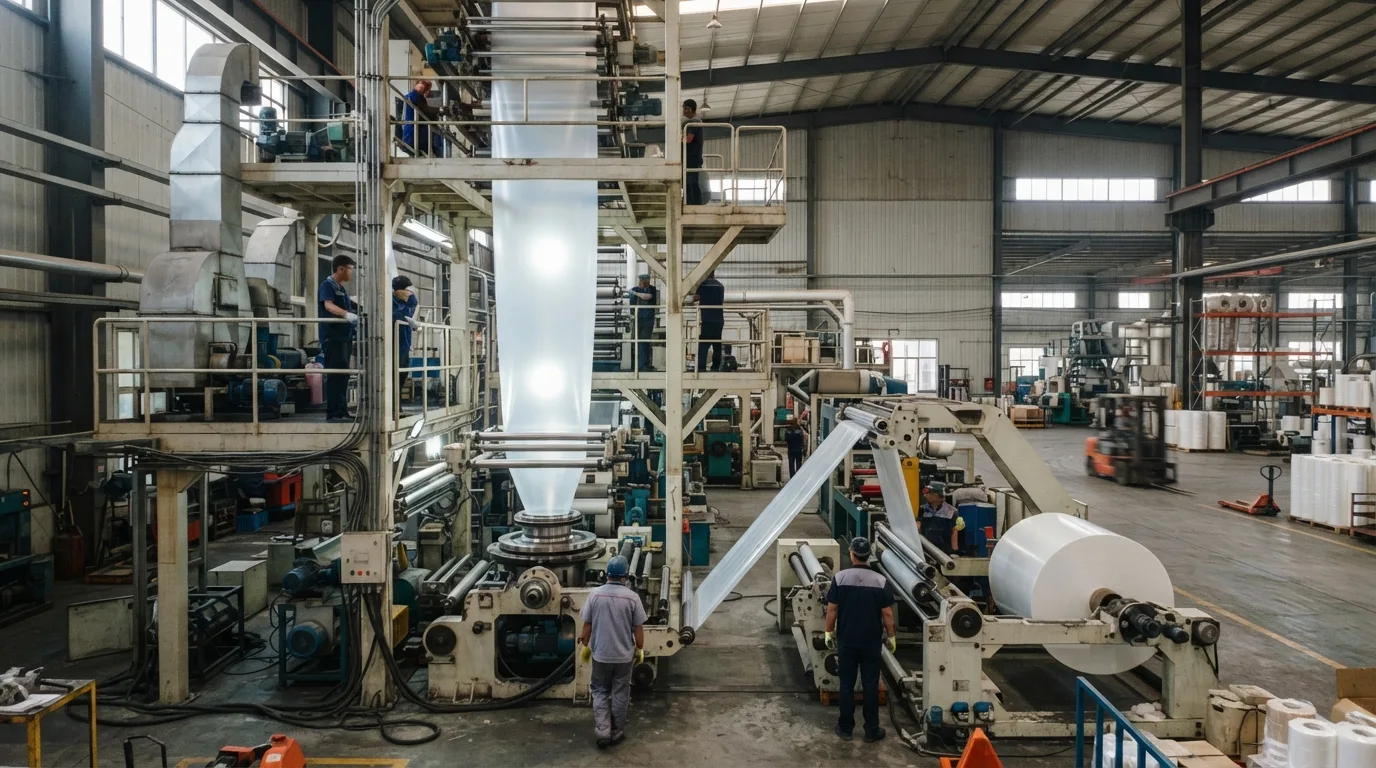 Blown film cooling and take-up tower for flexible polymer film production
How Should Processors Select Between Rigid and Flexible Grades?
Material selection balances mechanical stress requirements against downstream conversion speeds. When an application demands load-bearing wall stiffness, top-load container stacking, and hydrostatic burst resistance, high-density resin is the correct choice. Industrial processors utilize Recycled HDPE Granules Supplier in the UAE to manufacture Recycled HDPE Drum Blow Moulding Grade — 200L, Recycled HDPE Blow Moulding Grade — 20L jerricans, material handling pallets, and threaded closures that maintain seal integrity under high tightening torque.
When production centers on elongation, dart impact toughness, puncture resistance, and optical clarity, processors select low-density or linear low-density grades. Converting facilities utilize Recycled LDPE / LLDPE Granules Supplier in the UAE to produce Recycled LLDPE Blow Grade — Flexible Film & Bags, greenhouse films, protective bubble wraps, and flexible squeeze bottles that bend repeatedly without stress cracking.
Before offloading bulk resin shipments into factory silos, quality teams must test the melt flow index at 190 °C under a 2.16 kg load alongside solid density measurements. Verifying these values for each delivery prevents viscosity variations, parison sag during blow molding, and bubble instability on film lines. Golden Square Plast manufactures consistent recycled grades in Al Ain Industrial City to meet strict processing requirements across extrusion and molding facilities.
Submit your part drawings, mold specifications, and target production rates to our engineering team to receive recommendations for your processing lines, then Request a quote.