
Published
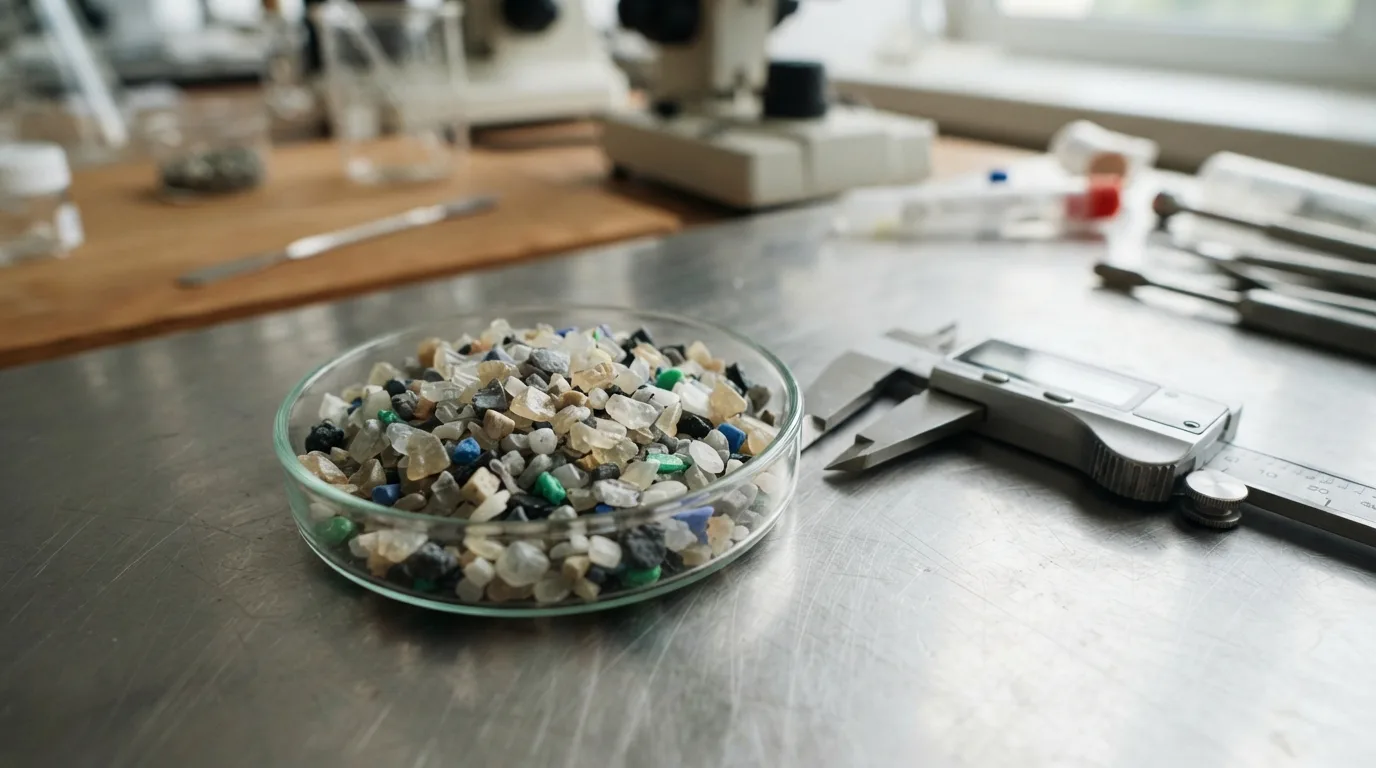 High-angle close-up of natural recycled plastic granules resting in a laboratory testing dish next to precision calipers
Evaluating recycled plastic granules requires a systematic five-stage audit of compounding controls, laboratory specimens, and shop-floor trials before signing off commercial deliveries. Factory buyers verify scrap purity, melt stability, and screen filtration up front to prevent machine damage, erratic cycle times, and structural part failures on production lines.
1. Compounding Process and Feedstock Audit Before Ordering Samples
Pellet manufacturing follows a strict sequence: sorting raw feedstock, shredding into uniform flakes, multi-stage hot washing to strip glues, mechanical and thermal drying, melt extrusion through continuous fine-mesh screens, vacuum degassing, and underwater or strand pelletising. Auditing these mechanical processing stages allows buyers to verify that a reprocessor manages thermal degradation and melt filtration effectively before requesting trial material. Inquire whether the raw feed originates from post-industrial scrap (PIR) or post-consumer collections (PCR). Feedstock purity governs mechanical stability; single-origin streams like unprinted dairy containers or warehouse transport crates process far more reliably than mixed municipal collections.
Put technical questions directly to the plastic granules manufacturer regarding their compounding lines:
- Feedstock origin: Single-polymer stream segregation versus commingled collection baling.
- Wash plant sequence: Multi-stage hot friction washing to strip adhesives and paper labels versus superficial cold rinsing.
- Melt degassing: Dual-zone vacuum extraction along the extruder barrel to pull out volatile compounds, trapped moisture, and residual ink solvents.
- Melt filtration rating: The specification of the melt screen changer. Blown film extruders require continuous screen filtering between 80 mesh and 120 mesh. Heavy injection moulding can operate smoothly with 60 mesh to 80 mesh filtration.
A satisfactory response proves a dedicated feedstock source, such as sorted blow-moulded bottles or clean polypropylene raffia scrap, coupled with twin-vented vacuum extrusion lines. Look out for warning signs such as vague descriptions of mixed polyolefins, unverified scrap origins, or the absence of precise mesh ratings for melt filtration.
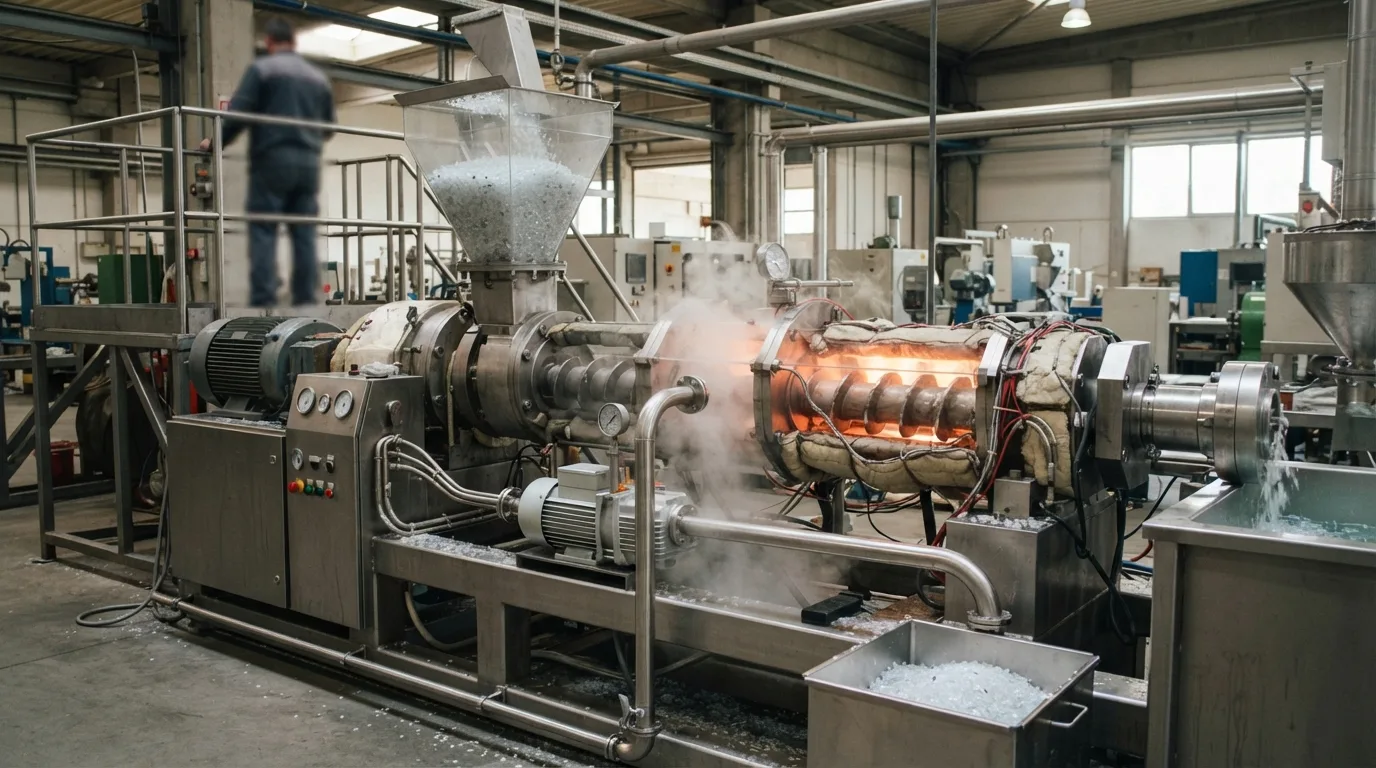 Industrial twin-screw compounding extruder running clean washed polyolefin flakes through a vacuum degassing zone
2. Application Matching and Downstream Technical Suitability
Processors source recycled plastic granules to convert recovered polyolefins into durable goods like transport crates, drainage pipes, chemical drums, and construction film liners for industrial distribution. Aligning melt viscosity with mould geometries and wall thicknesses prevents structural brittleness and long cycle stalls.
Measure the Melt Flow Index (MFI) under standard barrel temperatures (230°C for PP; 190°C for PE):
- Extruded irrigation pipes and smooth profiles: 0.05 to 0.40 g/10 min.
- Blown refuse sacks and industrial liners: 0.20 to 0.80 g/10 min using Recycled HDPE Blow / Extrusion Grade — Film & Liners.
- Blow-moulded chemical jerrycans and technical containers: 0.25 to 0.75 g/10 min using Recycled HDPE Blow Moulding Grade — 1–10L.
- Heavy handling bins, pallets, and crates: 8.0 to 25.0 g/10 min using Recycled PP Crate / Basket Injection Grade Granules.
The supplier should demonstrate that blow-moulding polyolefins meet standard Environmental Stress Crack Resistance targets, resisting crack propagation during surfactant exposure trials demanded by industrial container buyers. A critical warning sign is any vendor offering a single universal MFI grade and claiming it runs across both thin-film blowing towers and fast-cycling injection tools.
Factory scrap management protocols must also define secondary outlets for production purge lumps, start-up trims, and surplus raw stock. When trial runs generate off-spec resin or excess material, moulders route these polyolefins to secondary processors producing thick-walled items like subterranean cable protection tiles or establish buyback arrangements with toll-compounders to re-pelletise clean start-up waste.
3. How Do You Test a Sample of Recycled Plastic Granules?
Procuring raw production stock begins with rigorous benchtop inspection and lab verification on the trial container before loading material into machine hoppers. Conducting quick benchtop checks on a 25 kg sample bag catches excess moisture, heavy mineral loading, and foreign polymer contamination early.
Run these measurements in your quality control laboratory:
- Moisture content: Test a five-gram specimen on a halogen moisture analyzer at 105°C. Retained water must remain below 0.5 g per kg for injection moulding grades, and below 0.2 g per kg for thin film extrusion.
- Ash content: Perform a burn-off test to confirm mineral filler levels stay below 30 g per kg on unfilled polyolefin grades.
- Pellet geometry: Look for clean, regular cylindrical or lenticular cuts between 2.5 mm and 4.0 mm. Sieve out loose dust; fines must remain below 1 g per kg, with zero uncut pellet strands or hollow tails.
- Visual density: Granules must exhibit even colouration and standard polyolefin density (0.91 to 0.96 g/cm³), free of charred specks or metallic flecks.
A sharp, acrid odour signals severe thermal degradation from excessive heat passes. Drop a handful of pellets into water: pure polyethylene and polypropylene float freely, whereas sinking granules expose cross-contamination from denser foreign plastics like PVC, polystyrene, or high-density mineral masterbatches.
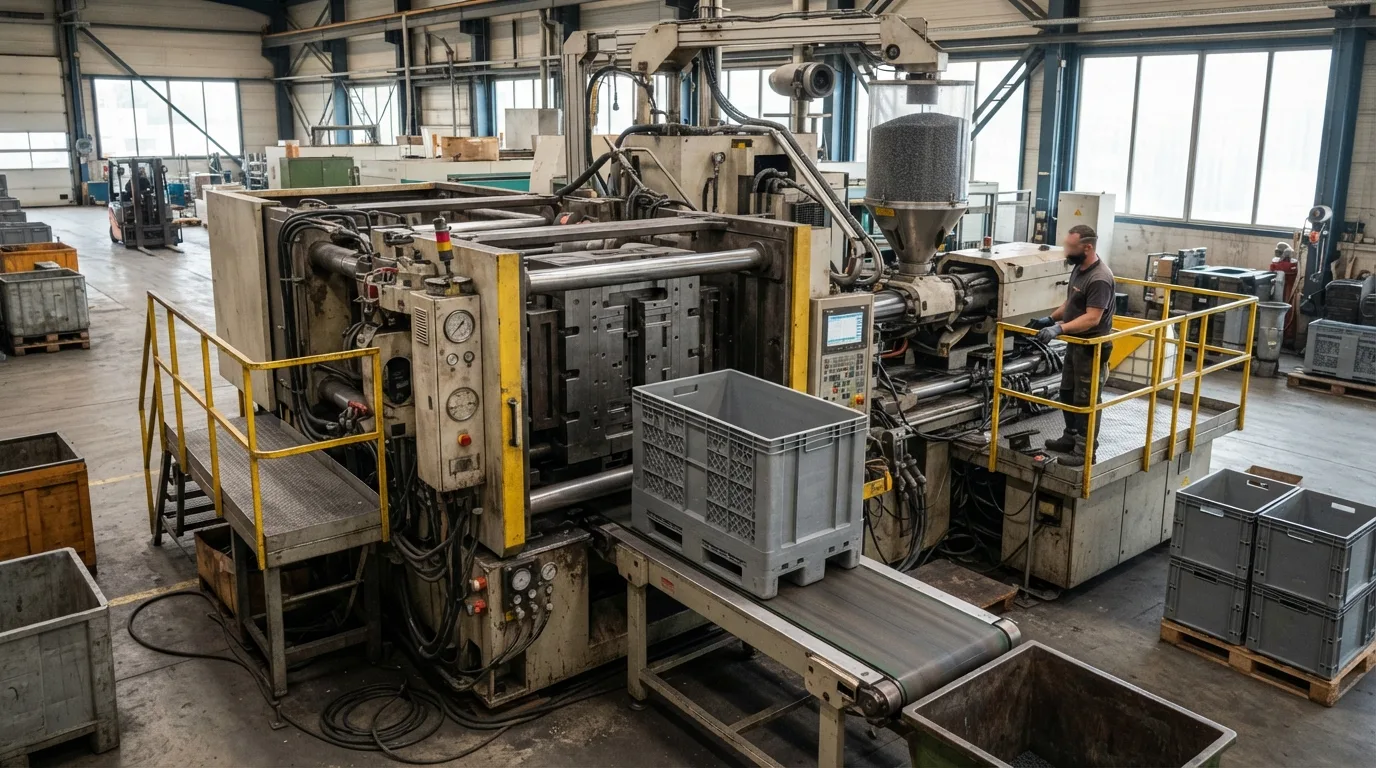 Heavy-duty plastic injection moulding machine producing structural transport crates from recycled polyolefin resin
4. Shop-Floor Processing Checks During the Machine Trial Run
Running shop-floor machine trials confirms whether the raw polymer maintains stable backpressure during crate moulding or blown film extrusion before releasing bulk commercial orders. Thoroughly purge the machine barrel, set heat bands between 190°C and 230°C, and track production parameters across a continuous trial run.
Monitor operational telemetry throughout the trial:
- Extruder pressure stability: Melt pressure at the screw tip must hold steady within a 10 bar range without surging at constant screw revolutions.
- Injection pressure uniformity: Peak hydraulic fill pressure across consecutive cycles should not vary by more than 5 bar.
- Breaker plate pressure: Measure continuous backpressure before the breaker plate. Clean reprocessed plastic granules cause a pressure rise of less than 25 bar per operational hour on extrusion dies.
A successful trial run matches virgin cycle times, fills complex moulds without flash or short shots, and maintains stable bubble geometry on film lines. Screen pack choking within the first half-hour, die lip drool, or heavy surface silvering indicate foreign particles, volatile inks, or unextracted moisture.
5. Batch-to-Batch Quality Sign-Off on First Commercial Delivery
Commercial procurement sign-off requires confirming that multi-ton production shipments match approved pilot properties without variations in compounding controls. Processing consistency depends on receiving uniform production lots that avoid raw scrap substitutions between deliveries.
Require the following documentation and delivery standards:
- Quality batch analysis: Ensure the manufacturer provides lot records verifying that the production Melt Flow Index remains within a window of 0.15 relative to the approved pilot baseline value.
- Packaging security: Deliveries must arrive in heavy multi-wall moisture-barrier 25 kg sacks or shrink-wrapped 1-ton bulk bags, stamped with clear lot and extrusion shift numbers.
- Pallet consistency: Pull grab samples from five random pallets across the freight bed. Pellet diameter, opacity, and hardness must match throughout the lot.
Reject shipments presenting mixed batch codes on a single pallet, contrasting colour tones between bags, or regrind flakes blended into compounded plastic recycling granules. Moulders evaluating technical grades can consult Golden Square Plast to review lot specifications.
Red Flags: When to Reject a Recycled Granule Consignment
Factory buyers must reject any incoming resin consignment at the receiving dock if inspection reveals non-negotiable processing defects:
- Particulate contamination: Visible stone grit, paper label fragments, unwashed adhesive, or metal shavings exceeding 1 particle per 1 kg of material.
- Rheology drift: Melt flow variations that drift substantially beyond a 0.25 variance ratio from the technical data sheet baseline, causing tool flashing or mould short shots.
- Moisture saturation: Granules that cause foaming and voiding during extrusion because the facility lacks auxiliary desiccant hot-air dryers.
- Incompatible polymer mixing: Blends of polyethylene and polypropylene that produce part delamination, weak weld seams, or brittleness during drop impact tests.
To verify technical polyolefin grades tailored to your extrusion or moulding machinery, Request a quote from Golden Square Plast.