
Published
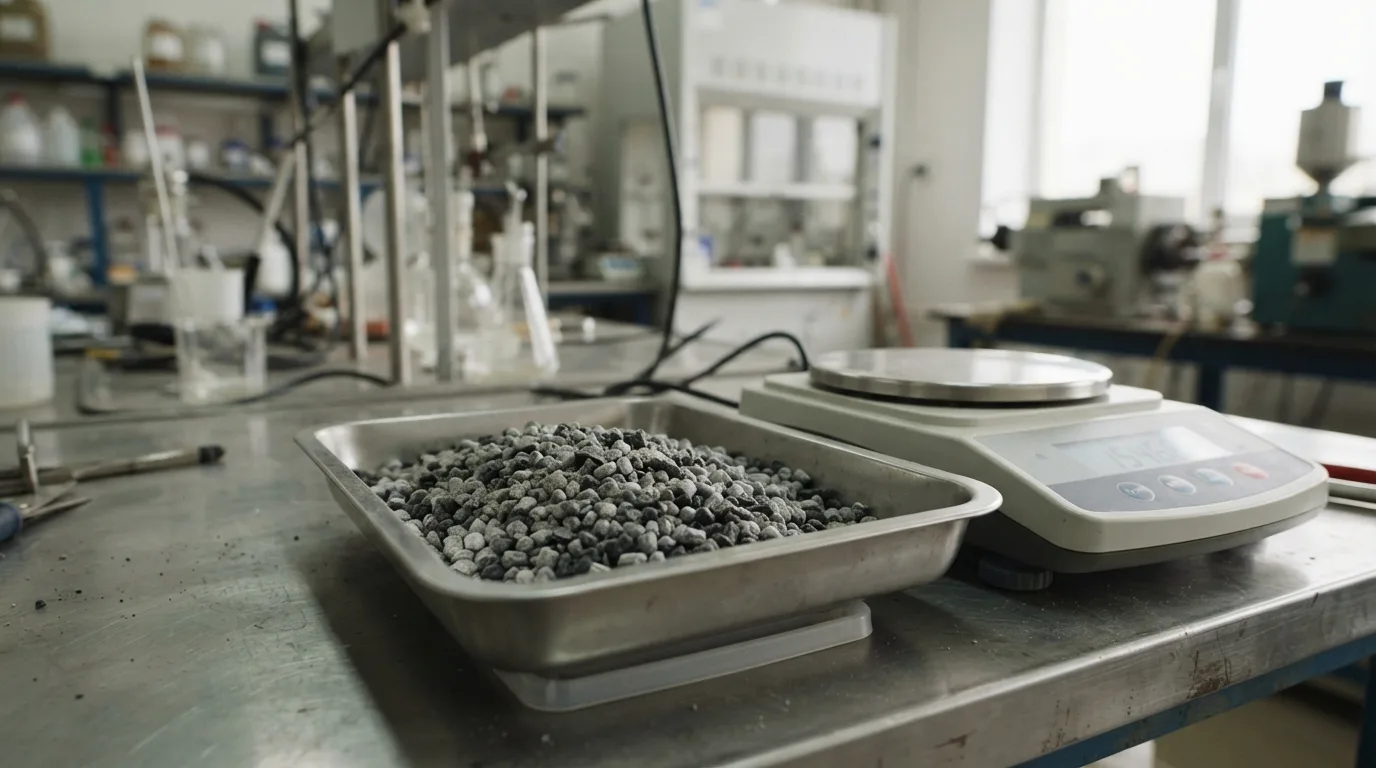 Recycled polypropylene granule samples for quality testing
Polypropylene is a semi-crystalline thermoplastic polyolefin with a density between 0.90 and 0.91 g/cm³ and a crystalline melting point between 160 °C and 165 °C. It provides mechanical rigidity, resistance to cyclic fatigue, and steady chemical stability across injection moulding and extrusion lines producing rigid containers, technical mouldings, piping, and woven tapes.
Is polypropylene a plastic or a rubber and how does it compare?
PP belongs to the thermoplastic family rather than thermoset rubbers or inorganic glass networks. Glass is an amorphous, brittle silicate structure that breaks under sudden load and cannot undergo thermal remelting. PP consists of semi-crystalline polyolefin chains that absorb dynamic impacts, flex repeatedly without fatigue failure, and melt reversibly when exposed to controlled heat. Certain clarified copolymer formulations achieve optical clarity approaching clear packaging glass, yet they retain ductility, high yield strength, and fracture resistance during transit.
The polymer differs fundamentally from vulcanised rubber compounds. Rubbers depend on irreversible chemical crosslinks formed during curing, preventing them from being melted down or reshaped once set. PP relies entirely on reversible physical crystallites that liquefy when heated past their melting band and resolidify upon cooling. While rubber-modified grades incorporate synthetic elastomeric phases to improve low-temperature drop strength, the continuous phase remains an easily processed thermoplastic that runs through standard extruder screws.
Compared to commodity resins like polystyrene, polyvinyl chloride, or polyethylene terephthalate, this polyolefin features non-polar aliphatic chains that yield a density of 0.90 g/cm³. This is the lowest specific gravity among primary commercial polymers. Injection moulders produce more finished parts per ton of raw material than they can with heavier engineering resins, reducing part mass while preserving structural wall stiffness.
Finished articles tolerate continuous operating temperatures up to 100 °C under moderate physical load. Crystalline melting occurs between 160 °C and 165 °C, giving converted parts higher thermal resistance than low-density polyethylene, which softens below 90 °C. The polymer resists hot process water, non-oxidising acids, basic wash solutions, and inorganic salts, preventing deflection in hot drainage pipes and commercial wash basins.
Industrial Polymer Grades and Conversion Performance
Converting plants classify the resin into three distinct commercial families based on monomer configuration. Each structure sets machine temperatures, cycle times, and mechanical limits:
Homopolymer consists of continuous propylene units arranged in an isotactic sequence. This regular chain packing yields high crystallinity, raising tensile modulus to a span of 1300 to 1600 MPa. Extrusion and tape-drawing lines take advantage of this stiffness to manufacture raffia yarn, strapping bands, and woven agricultural sacks. Thin-wall container moulders utilise its high melt fluidity and rigidity to manufacture stackable tubs that resist sidewall buckling under warehouse storage loads.
Impact copolymer solves low-temperature brittleness through reactor-level modification. Ethylene monomer is introduced into the polymer matrix at 5 to 15 parts per hundred by weight during secondary reaction phases. This creates finely dispersed ethylene-propylene rubber microdomains that disperse impact energy and halt fracture propagation down to -20 °C. Industrial handling boxes, battery cases, automotive undertray shields, and heavy logistics skids rely on this structural toughness.
Random copolymer incorporates ethylene units at irregular positions along the polymer chains. This disordered placement suppresses crystal growth, dropping the melting point to roughly 145 °C while providing superior optical clarity. Converters specify this material for domestic hot-water distribution pipes, technical laboratory ware, transparent cosmetic containers, and medical syringes requiring steam autoclaving without haze development.
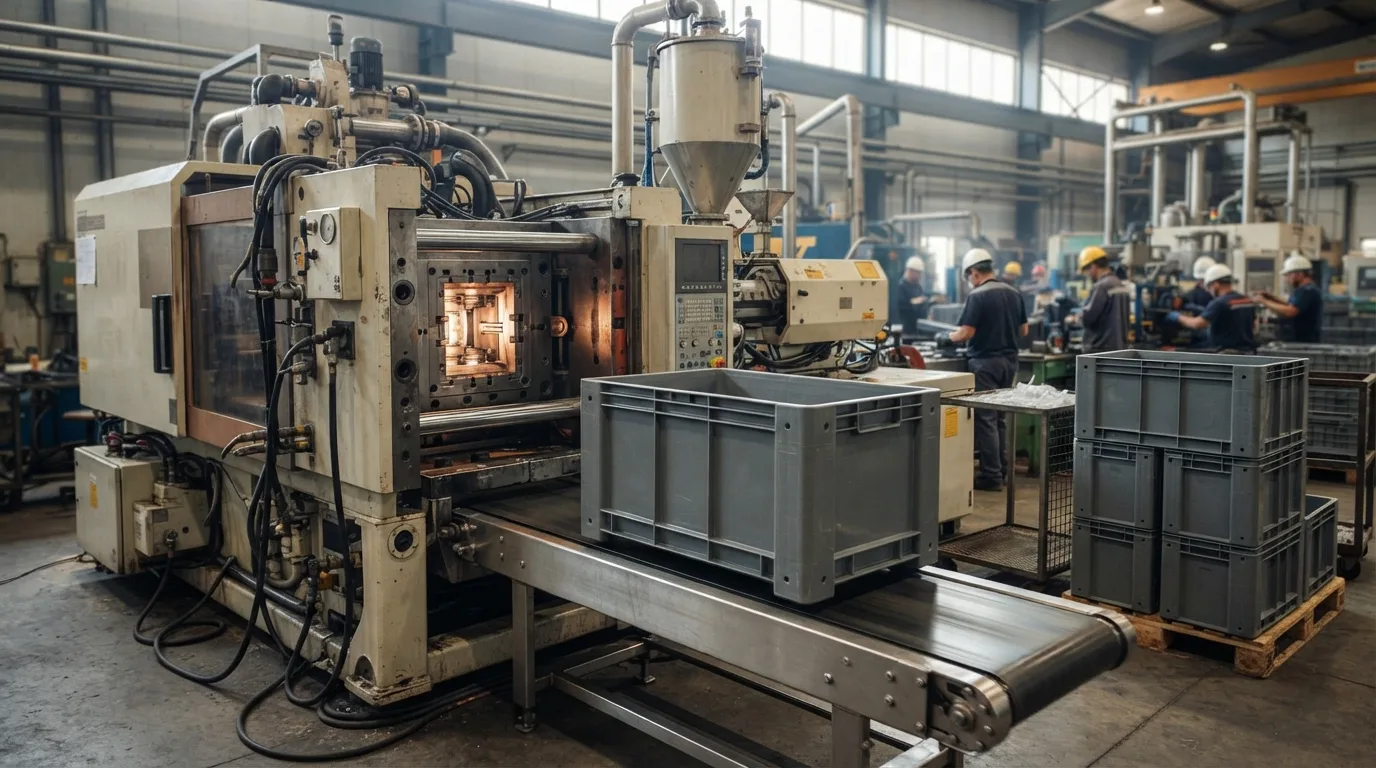 Heavy industrial injection moulding crate production line
| Polymer Type | Tensile Modulus (MPa) | Izod Impact at -20 °C (kJ/m²) | Melting Point (°C) | Specific Gravity (g/cm³) | Melt Flow Rate (g/10 min) | Primary Industrial Applications |
|---|---|---|---|---|---|---|
| Homopolymer | 1300 – 1600 | 2.0 – 4.0 | 160 – 165 | 0.900 – 0.905 | 2.0 – 40.0 | Raffia tapes, woven bulk bags, thin-wall food tubs |
| Impact Copolymer | 1000 – 1250 | 7.0 – 15.0 | 160 – 163 | 0.905 – 0.910 | 1.0 – 25.0 | Storage crates, automotive housings, transport pallets |
| Random Copolymer | 850 – 1150 | 4.0 – 6.5 | 140 – 150 | 0.895 – 0.905 | 6.0 – 30.0 | Hot-water plumbing pipes, clarified bottles, syringes |
Safe Thermal Processing and Workplace Thresholds
The base polyolefin structure is chemically inert. It does not react with process salts, mineral detergents, or common metal lubricants during conversion or conveying. The polymer matrix remains stable under ambient shop-floor conditions and releases no dangerous fumes at normal operating pressures. Factory managers preparing raw materials for regulated end uses must confirm that the selected grade carries explicit technical qualification for the intended application. Consult our technical team to verify grade compliance before ordering.
Moulded components retain dimensional stability under thermal stress up to 120 °C, outlasting polystyrene, which softens near 80 °C, and unoriented polyethylene terephthalate, which deflects around 70 °C under load. The material maintains high resistance to environmental stress cracking when in contact with industrial greases, organic cleaners, and motor fluids.
Safe processing requires keeping melt temperatures below 280 °C along all barrel zones. Heating the melt beyond this limit breaks molecular chains and releases volatile organic thermal degradation products that irritate eyes and breathing passages. Production plants must install dedicated local extraction hoods directly over machine purge stations, tool clamp areas, and feed hoppers. Pneumatic transfer pipes and day bins require continuous copper grounding wires to dissipate electrostatic charges caused by dry granule friction.
Production Challenges and Machine Adjustments
Process engineers encounter three primary processing difficulties when running this material: ultraviolet degradation, mold shrinkage, and cold embrittlement in unmodified homopolymers.
Direct solar exposure triggers photo-oxidation along the polymer chains, resulting in surface crazing, loss of gloss, and reduced tensile elongation. Outdoor mouldings such as waste carts, stadium chairs, and agricultural pallets counter this breakdown through compounding packages containing hindered amine light stabilisers and phenolic process antioxidants. Operators must verify additive dosing to avoid surface bloom during fast cycle times.
Volumetric mold shrinkage runs between 15 and 25 mm per linear meter because crystals pack tightly as the melt cools. Insufficient packing pressure causes structural warping and deep sink marks over thick ribs. Machine operators eliminate these defects by setting tool cooling water between 20 °C and 40 °C for balanced heat extraction, increasing holding pressure by 10 to 20 bar, and holding pressure until gate freeze occurs. When homopolymer mouldings crack in unheated storage, toolmakers switch production to impact copolymer grades or blend elastomeric impact modifiers during compounding.
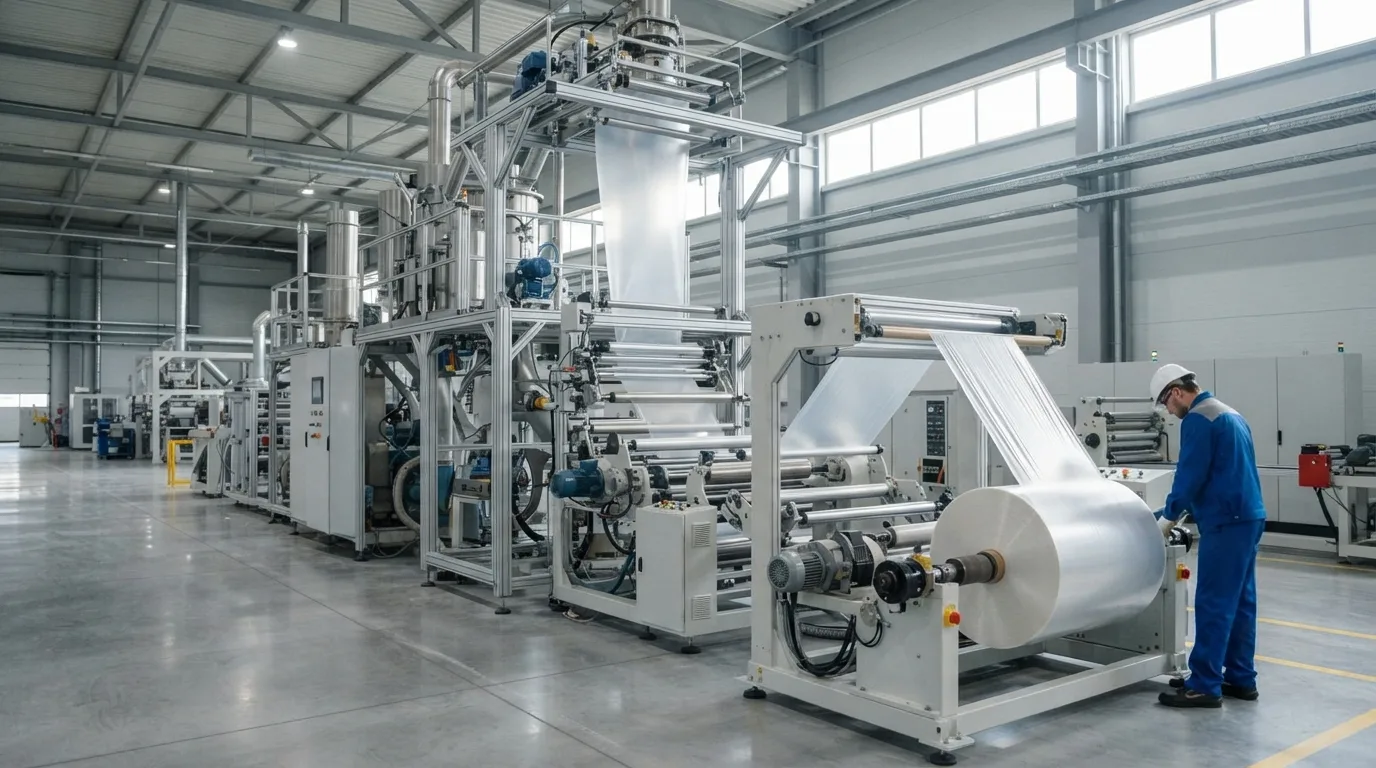 Extrusion and sheet calendering line inside converting plant
Quality Verification on Recycled Pellet Shipments
Plant managers purchasing recycled resin lots must execute a rigorous testing protocol to protect machine screws, maintain consistent part weight, and eliminate mold contamination:
- Melt flow rate: Measure at 230 °C under a 2.16 kg test load. Keep batch-to-batch variation within 10 units of the agreed nominal target to avoid short shots and flash on multi-cavity tools.
- Melt filtration: Verify that the melt passed through screen packs between 80 and 120 mesh during reprocessing. Fine screening removes grit, metallic dust, and charred resin specks that block hot-runner gates and score cavity surfaces.
- Polymer purity and moisture: Check density values to detect polyethylene contamination, which impairs weld-line strength and lowers part stiffness. Ensure moisture content remains below 0.05 g/kg via desiccant drying to prevent silver streaking and surface splay.
- Pigment dispersion: Inspect moulded plaques under standardized daylight illumination to confirm uniform color dispersion without unmelted polymer gels, additive clusters, or streak lines.
- Melt uniformity and screw recovery: Monitor extruder drive torque during dosing. Fluctuating screw load signals uneven granule melting, which raises motor wear and leads to dimensional drift across successive production cycles.
Golden Square Plast supplies converting facilities with consistent, lab-verified recycled granules. Converters run our Recycled PP Injection Moulding Grade Granules for thin-wall consumer parts, and our Recycled PP Crate / Basket Injection Grade Granules to maintain structural impact resistance across heavy logistics containers.
Review your tool geometries and cycle targets with our technical engineers to arrange sample evaluation: Request a quote.